
March 5, 2026
Housing supply and affordability have been a top priority for the Eau Claire Chamber of Commerce, necessary for a growing economy and ensuring people have a place to live. On Friday, February 27th, the Chamber hosted an Eggs and Issues program that peered into the several innovations the City of Altoona is applying to the matter of housing affordability. The discussion centered on the $6 million affordable housing fund, recent developments with Altoona's 80-acre east-side property, and an examination of new zoning code designs. Panelist Altoona Mayor Brendan Pratt, City Administrator Mike Golat, co-owner of C&M Home Builders Cody Filipczak, and Grant and Housing Program Manager Julian Emerson led the discussion.

Mayor Pratt opened by noting this project has been eight years in the making and that the collaboration of citizens and businesses will be key to success. During that time, “the median home sale price has increased by 80%.. [and] the median household income has increased by just 36%," says Mayor Pratt. This gap has “real consequences” for our workforce and local economy, providing challenges for builders and developers. One significant barrier to building affordable homes has been navigating the permit and approval process. “Time is running,” says Mayor Pratt, “ and when projects are slowed down, cost-wise, affordability declines.” This month, Altoona saw major zoning changes that will streamline the permitting process and reduce barriers to development. New subdivisions and zoning ordinances help to make this possible, but the update is still waiting for city council approval.
Altoona also implemented another initiative. By extending a Tax Incremental District (TID) for one additional year, Altoona was able to establish over a $6.7 million affordable housing fund. This fund will help sustain and support new affordable housing projects for years to come, viability being a priority. “This is about more than housing,” explains Mayor Pratt, “this is about housing security, workforce ability, and economic growth.” City Administrator Mike Golat clarified the early realization that TID money is taxpayer money, meaning the people who “need benefits are the people that put money into the program.” Ensuring this project is sustainable requires collaboration and relationships with businesses and developers. Sustainability also means this project isn’t just about building new affordable housing, but keeping the affordable housing Altoona already has.
Loan Program
On February 12th, Altoona’s City Council approved the first disbursement of the $6.7 million housing fund. Allocating “$1.5 million for a safe steps and home improvement program,” says Grant and Housing Program Manager Julian Emerson. This program enables people to make repairs on their affordable homes that they wouldn’t be able to otherwise. The program comprises four categories: home repairs, energy efficiency, yard clean-up, and disabled vehicle disposal. Repairs would be paid upfront by the housing fund, and participating individuals would enroll in a relatively low, forgivable loan repayment program. Each loan would carry no interest of up to $7500 for qualifying households, repaid at this level over a five-year period. “So if you did the maximum loan, it would be $125 per month. A lot of folks won’t need that high… but that’s the max,” says Emerson. This project recognizes that many households still won’t be able to afford this program, and that’s why it includes the option to not make monthly payments and instead replace the cost of the loan as a second mortgage on the home, and when the house is sold or changes hands, the loan amount will be paid to the city.
The anticipated largest use of this program is energy efficiency repairs. As these repairs tend to be more expensive, this program qualifies households for a higher maximum loan of $12,000 repaid over 10 years (or $120/month). Energy efficiency examples could include replacement doors, windows, siding, insulation, heating and air conditioning systems, and furnace replacements.

The cleanup program encourages households to remove violations of city regulations in their yards, improving safety and appearance. “There’s not a loan with this program,” says Emerson, “instead, we will pay up to $500 per property for the cleanup, the labor to do the cleanup, and the disposal of items.” To save homeowners money on this, Altoona is partnering with Chippewa Valley Habitat for Humanity, which makes costs cheaper through volunteer labor. Similarly, the disabled vehicle removal program is not a loan. For no cost to the homeowner or city, agencies will come and remove the vehicle.
Sustainability
The City of Altoona could spend the $6 million affordable housing fund in many ways; however, city staff are working hard to maximize the impact and create project sustainability. One of the best ways to do this is through partnerships that bring expertise, resources, and stretch the impact of limited funds. At this time, Altoona had eight partners working on the housing fund (with another in the works). For example, Chippewa Valley Habitat for Humanity is going to be providing a lot of the labor, helping keep the project affordable. Partnering with Eau Claire Energy Cooperative, Xcel Energy, and Western Dairyland’s weatherization program provides rebates that save money in energy efficiency improvements.
With the city's approved $1.5 million dollar investment (of the $6.7 million), between 20 and 24 homeowners (or roughly two a month) are projected to be helped through this program a year. The revolving loan program structure would circulate funds, replenishing the original fund, maintaining project viability for years to come.
Future of Program & East Neighborhood Initiative
The revolving loan program is just the start. As Altoona discusses more partnerships that provide further affordability improvement opportunities, ideas such as a down payment assistance program for home buyers, low interest loans to incentivize developers to build affordable housing, developing small homes (similar to completed projects such as Solis Circle in Altoona), and other projects aimed to close the affordability gap to build single-family homes.
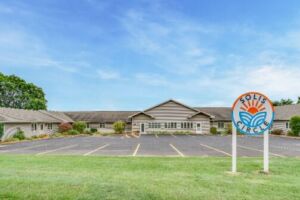
Through an 80-acre property purchased several years ago, Altoona envisions a mixed-use development, taking advantage of good highway infrastructure for commercial properties, but also transitioning into higher and lower density single-family homes. The question then became, “How are we going to create quality neighborhoods that are just more affordable to build?” Co-owner of C&M Home Builders, Cody Filipczak, commented that start prices have jumped from $280,000 on a $40,000 lot (2019-20) to $420,000 on a $80,000 lot (2025). Through partnerships, smaller lot sizes, and working directly with developers, “I think we can get it for $40 to $50,000 under the price we are currently at,” says Filipczak.
Q&A
When the panelists were asked, "How would you see regulatory reform playing a part in lowering the cost of building?", Mike Golat responded, saying that they have control over local regulatory reforms, not federal and state. It is all dependent on processes. Code revisions are focused on reducing setbacks and lowering the previous size restrictions.
The panel was asked why compact neighborhoods, 800 sq. ft. homes with two bedrooms and one bathroom, are not being built anymore. Cody Filipczak, speaking from a builder's perspective, said that moving down to a 800 sq. ft. home or under is not that realistic. "Garage capacity is huge in our area, people want at least a two car garage". "At the end of the day, the size doesn't matter as much as you think. What is expensive about a house is the bathroom and kitchen".
Posted by Brennen Bolopue & Gigi Galdamez Governmental Affairs Interns
bolopue@eauclairechamber.org
galdamez@eauclairechamber.org